4W Framework vs Intelligent Workplace Explained
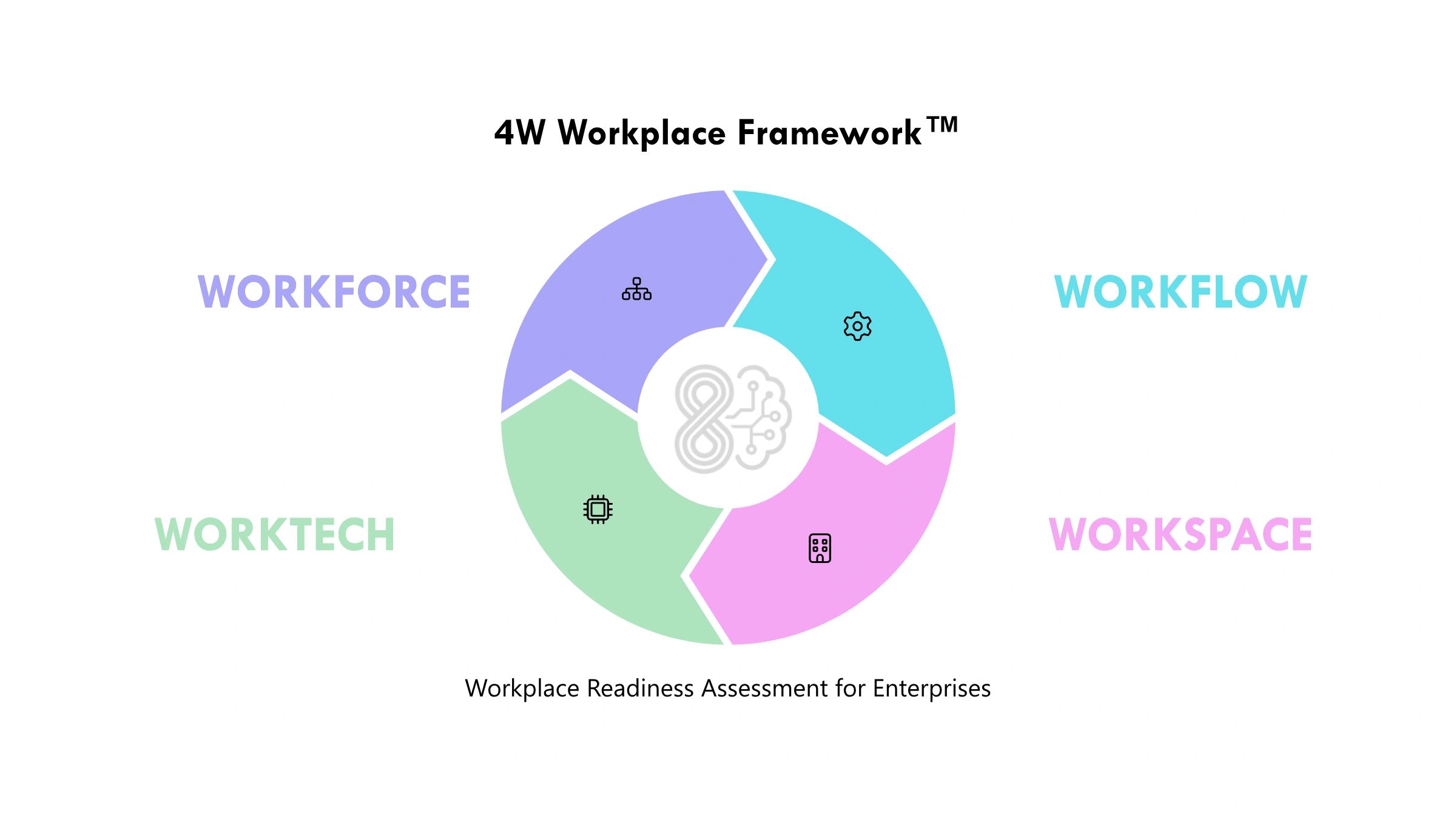
The 4W Workplace Framework™ is the diagnostic instrument used to assess an organisation's maturity across four structural dimensions: Workforce, Workflow, Workspace, and WorkTech. The Intelligent Workplace™ is the operating model that the 4W Framework measures. One is the instrument. The other is the target state. Conflating them is the most common category error in enterprise workplace transformation, and it consistently produces misdirected programmes.
The Conflation That Derails Transformation Programmes
It happens in boardrooms, procurement meetings, and transformation kick-offs with enough regularity to be a pattern rather than an exception.
A leadership team commissions a workplace transformation initiative. The programme is built around the 4W Workplace Framework™. Assessments are conducted. Dimension scores are produced. The team improves its scores. At the twelve-month review, the organisation's maturity metrics look better. The transformation, however, feels largely unchanged.
The reason is architectural. The team optimised for the instrument rather than the operating model the instrument was designed to measure. They improved their scores. They did not improve their structure.
This is not a failure of effort or intent. It is a failure of category clarity. And it begins with a single conflation: treating the 4W Workplace Framework™ as the Intelligent Workplace™, when the two are fundamentally different things operating at different levels of the architecture.
What the Intelligent Workplace Actually Is
The Intelligent Workplace™ is an enterprise operating model. It is the target state, the structural architecture that an organisation is trying to achieve and sustain.
Its canonical definition is precise: an enterprise operating model that aligns four structural dimensions, Workforce, Workflow, Workspace, and WorkTech, into a unified, AI-enabled system designed to enable consistent organisational performance, decision quality, collaboration, and innovation at scale.
Three things in that definition are worth holding.
- First: it is an operating model, not a project. It does not have a completion date. It is the architecture that governs how the organisation works, continuously, not episodically.
- Second: it is AI-enabled, not AI-led. The operating model precedes the technology. Organisations that deploy AI before aligning their Workforce, Workflow, Workspace, and WorkTech are deploying AI into structural fragmentation. The technology amplifies what already exists. If what exists is misaligned, AI accelerates the misalignment.
- Third: it is unified. The four dimensions do not operate as independent workstreams. They operate as an interdependent system. Maturity in one dimension constrained by fragmentation in another produces systemic underperformance regardless of how strong the leading dimension is.
The Intelligent Workplace™ is not a framework. It is what the framework measures.
What the 4W Workplace Framework Actually Does
The 4W Workplace Framework™ is the diagnostic lens. Its function is to assess how close an organisation is to the Intelligent Workplace™ operating model and to identify precisely what is constraining that distance.
It evaluates enterprise workplace maturity across four structural dimensions in symmetry:
- Workforce covers human capability, leadership maturity, digital behaviour, AI fluency, and cultural alignment.
- Workflow covers process clarity, decision rights, governance integrity, automation maturity, and orchestration quality.
- Workspace covers physical and digital environments that support collaboration reliability and focused execution.
- WorkTech covers interoperable AV, IT, cloud, security, data, and AI infrastructure enabling scalable operations.
The framework's governing principle is symmetry. Fragmentation in one dimension constrains performance across all others. An organisation with strong WorkTech and weak Workflow governance does not have a technology problem. It has a structural misalignment problem that technology is currently making more visible.
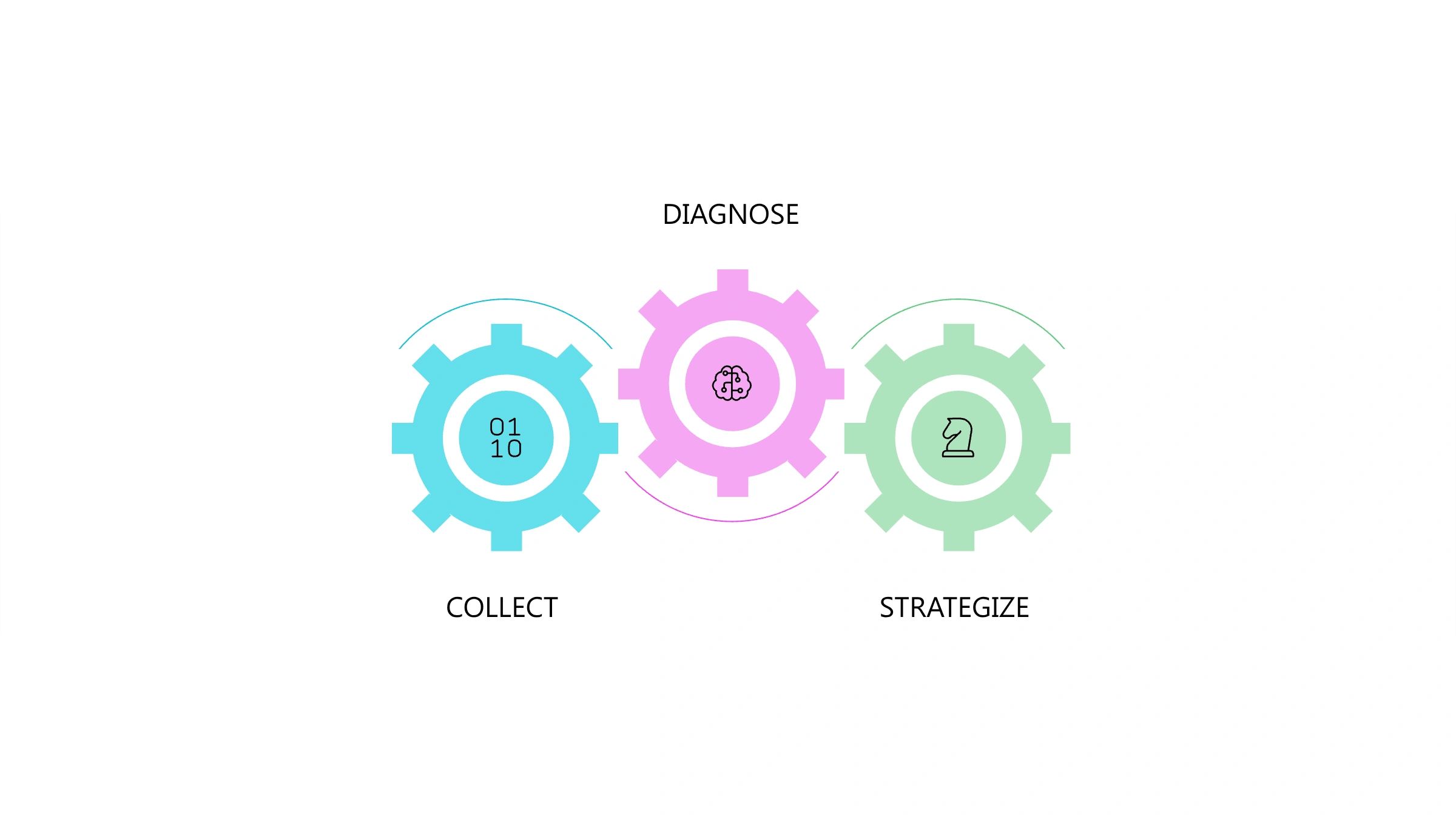
The 4W Workplace Framework™ is operated through the Strategic Diagnostic Engine™, the analytical mechanism that converts dimensional assessment into decision-grade intelligence. The framework defines what is being measured. The engine determines how measurement translates into causal understanding and sequenced action. Neither is sufficient without the other.
Why the Distinction Changes How You Lead Transformation
When the distinction between instrument and operating model is clear, three things change in how a transformation programme is designed and governed.
The first is how success is defined. If the 4W Workplace Framework™ is the programme, success is a maturity score. If the Intelligent Workplace™ is the programme, success is structural alignment, a workplace that operates as a unified, AI-enabled system with consistent performance, decision quality, and the organisational capacity to sustain and compound those properties over time. Scores are a leading indicator of that outcome. They are not the outcome itself.
The second is how interventions are sequenced. The 4W Workplace Framework™ reveals where an organisation sits across four dimensions. The Intelligent Workplace™ as the target state determines what matters about where it sits. An organisation at Workflow maturity level 2 with WorkTech at level 4 is not facing a technology gap. It is facing a structural constraint that no further technology investment will resolve. The target state makes the constraint legible. The framework surfaces it. The distinction between the two determines whether the right intervention is prioritised.
The third is how progress is governed. Maturity scores can be improved through tactical interventions that do not change structural performance. An organisation can increase its Workforce dimension score through training programmes, certifications, and AI tool adoption without any corresponding change in how human capability and AI operate together in practice. The Intelligent Workplace™ as the governing target forces the harder question: has the operating model actually moved? Governance that tracks dimension scores without asking whether structural alignment has improved is tracking the instrument, not the destination.
The Relationship Between the Two
The relationship is precise and non-negotiable.
- The Intelligent Workplace™ is the operating model, the unified system that aligns Workforce, Workflow, Workspace, and WorkTech. It is the answer to the question: what does a structurally mature, AI-enabled workplace look like?
- The 4W Workplace Framework™ is the diagnostic lens that assesses maturity against that model. It is the answer to the question: where are we now, what is constraining us, and what does the evidence show about the gap between current state and the operating model we are trying to reach?
- The Strategic Diagnostic Engine™ is the mechanism that connects them, converting the framework's dimensional assessment into causal intelligence, and that intelligence into a sequenced transformation roadmap.
Framework without operating model produces assessment with no clear destination. Operating model without framework produces aspiration with no diagnostic grounding. Neither produces transformation. The architecture requires all three layers working as a system.
The Practical Test
There is a simple test for whether a transformation programme has resolved this distinction.
Ask the leadership team: what are we trying to build?
- If the answer is a maturity score, a 3.8 on the 4W assessment, an improvement in the Workflow dimension, the programme is optimising the instrument.
- If the answer is a workplace that operates as a unified, AI-enabled system with consistent performance and the structural capacity to sustain it, the programme is oriented toward the operating model.
The first answer produces better assessments. The second produces an Intelligent Workplace™.
The distinction is not subtle. But it requires being made explicitly, early, and repeatedly, because the default in most organisations is to optimise what can be measured rather than to build what the measurement is pointing toward.
To explore more, visit:
- intelligentworkplace.ai/intelligent-workplace
- intelligentworkplace.ai/enterprises-4w
- https://intelligentworkplace.ai/strategic-diagnostics
Frequently asked questions
What is the difference between the 4W Workplace Framework and the Intelligent Workplace?
The 4W Workplace Framework is the diagnostic instrument that assesses maturity across Workforce, Workflow, Workspace and WorkTech. The Intelligent Workplace is the operating model it measures. One is the instrument; the other is the target state.
What is the Intelligent Workplace?
An enterprise operating model that aligns four structural dimensions, Workforce, Workflow, Workspace and WorkTech, into a unified, AI-enabled system designed to enable consistent organisational performance, decision quality, collaboration and innovation at scale.
Why does confusing the two derail transformation programmes?
Programmes built around the framework improve their dimension scores while the organisation stays largely unchanged. Maturity scores are a leading indicator of structural alignment, not the outcome itself.
How can leaders tell which one their programme is optimising?
Ask what the organisation is trying to build. If the answer is a maturity score, the programme is optimising the instrument. If it is a workplace that operates as a unified, AI-enabled system with the structural capacity to sustain it, the programme is oriented to the operating model.
Comments
Post a Comment