What Is the 4P Partner Framework?
The 4P Partner Framework™ gives buyers a standardised, objective lens for evaluating partners across four dimensions: Portfolio, Performance, Partnership and Profitability. It replaces selection on the strength of the pitch with selection on evidence.
The 4P Partner Framework™
By Marc A. Rémond Founder & Executive Partner, Strategic Pathways
Executive Summary
Buyers are increasingly accountable for workplace outcomes that extend far beyond procurement decisions. Hybrid work, integrated collaboration environments, and AI-enabled solutions have transformed workplace investments into complex, multi-stakeholder systems.
Yet partner selection practices have not evolved at the same pace. Despite structured RFPs, certifications, and reference checks, outcomes remain inconsistent. Similar vendors and integrators deliver markedly different results across projects, regions, and use cases. The root cause is not procurement rigor. It is systemic misalignment.
The 4P Partner Framework™ provides buyers with a structured, evidence-based operating model for evaluating, comparing, and selecting partners based on their ability to deliver Intelligent Workplace outcomes, not just contractual compliance.
Why Partner Selection Has Become a Strategic Risk
Workplace investments were once transactional. Buyers evaluated price, scope, and technical fit. Delivery was largely predictable, and post-handover risk was limited. That reality no longer exists.
Today’s workplace solutions span physical and digital environments, depend on integrated ecosystems, and increasingly rely on AI-enabled workflows. Performance depends on how well vendors, integrators, and internal teams operate as a system.
Buyers are accountable for outcomes they do not fully control. When partner selection focuses on surface indicators rather than systemic capability, risk becomes embedded before delivery begins.
The Illusion of Control in Traditional Procurement
Most procurement processes are designed to create fairness and comparability.
They emphasise:
- Certifications and partner status
- References and case studies
- Pricing and contractual terms
- Compliance with technical requirements
These signals are necessary, but insufficient. They provide limited insight into how a partner will perform in a specific organisational context, across regions, and over time.
As a result, partners that appear equivalent on paper often produce very different outcomes in practice. This variability is not accidental.It is the result of misalignment across the delivery system.
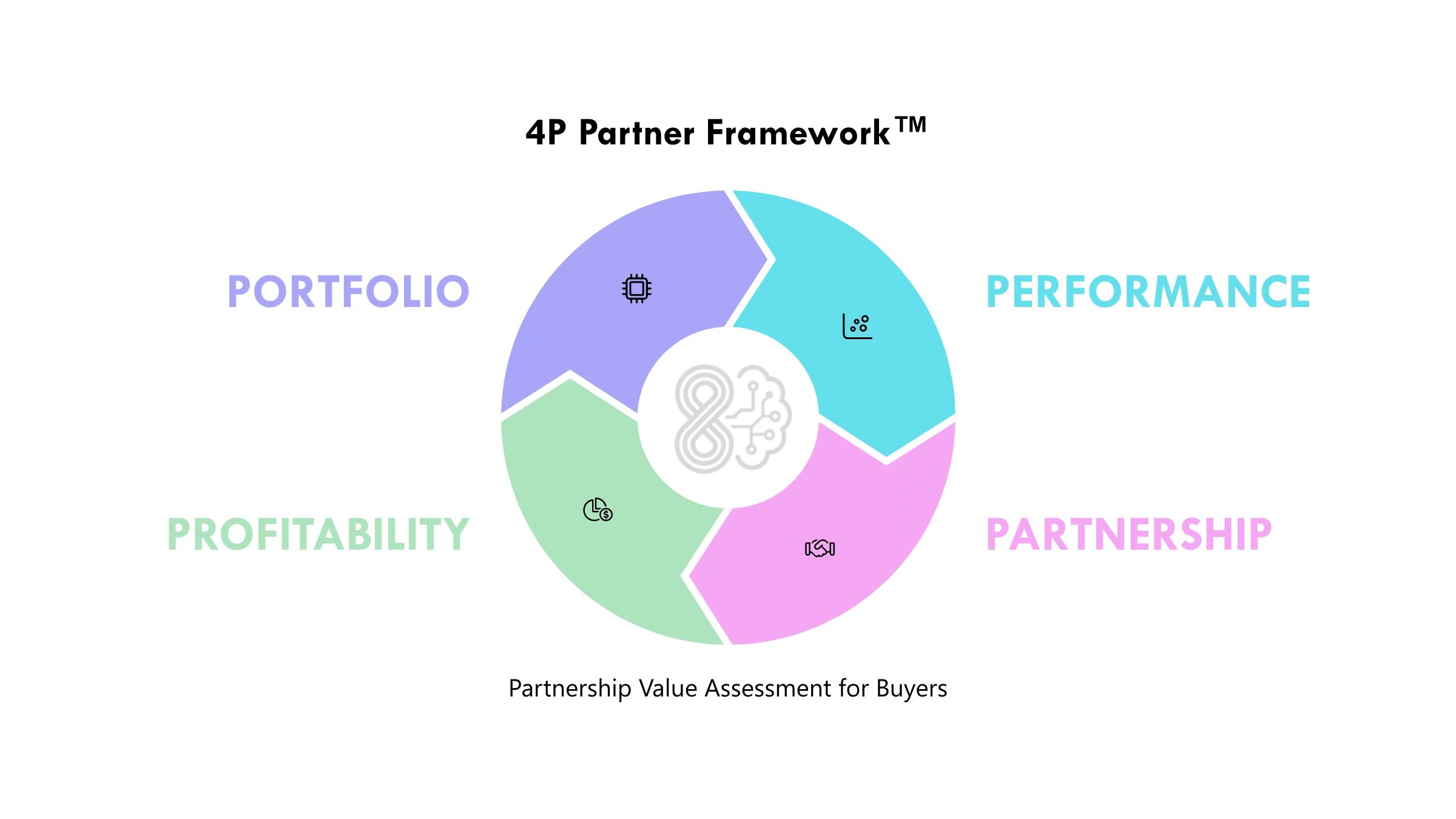
Introducing the 4P Partner Framework™
The 4P Partner Framework™ provides buyers with a structured approach to evaluating partners across four interconnected dimensions:
- Portfolio: Solution fit, technical interoperability, roadmap alignment, security posture and AI readiness. Not what a partner sells, but how coherently it fits the operating model the buyer is building.
- Performance: Reliability, product quality, support responsiveness, service maturity and customer outcomes, shown by evidence rather than testimonials.
- Partnership: Engagement quality, transparency, cross-functional collaboration and long-term strategic alignment: what working with the partner is actually like after the contract is signed.
- Profitability: Pricing model, total cost of ownership, renewal structure, deployment costs and long-term value: the most defensible economics over the life of the relationship, not the cheapest bid.
Each dimension may appear sufficient in isolation. Defensible partner decisions emerge only when all four are assessed together.
Partner Maturity and Outcome Variability
Buyer experiences typically follow a familiar pattern. Initial deployments succeed due to individual effort or local expertise. As scope expands, variability increases.
Performance becomes inconsistent across locations, teams, and use cases. This is not a partner quality issue. It is a maturity issue. Partners operate at different levels of delivery, governance, and system integration.
Without a structured way to assess these differences, buyers are forced to learn through experience, often at significant cost. The 4P Framework provides early visibility into these maturity gaps.
Why 4P Matters in the Intelligent Workplace Era
The Intelligent Workplace is a system. AI-enabled workflows, hybrid collaboration environments, and integrated technologies amplify both strengths and weaknesses in partner performance. Inconsistent delivery undermines workflow reliability, collaboration equity, and AI effectiveness.
The 4P Partner Framework™ enables buyers to:
- Compare partners based on outcome capability rather than surface metrics
- Reduce execution risk before contracts are signed
- Align partner selection with workplace maturity and strategy
- Improve consistency across regions and programmes
- Build long-term partnerships rather than transactional relationships
For buyers, partner selection is no longer a sourcing activity. It is a strategic operating decision.
Strategic Outcomes for Buyers
Organisations applying the 4P Partner Framework™ achieve:
- Greater predictability in delivery outcomes
- Reduced operational and reputational risk
- Faster value realisation from workplace investments
- Improved alignment between procurement, IT, facilities, and business teams
- Stronger foundations for AI-enabled work
The result is not just better partner selection, but better workplace performance.
Conclusion
Buyers do not fail because they choose the wrong product.
They struggle because they select partners without visibility into how outcomes will be delivered.
The 4P Partner Framework™ provides a structured way to move from transactional procurement to system-aware partner selection.
In 2026, buyers who treat partner selection as an operating model decision will outperform those who continue to rely on legacy procurement signals.
About the Research
This research is based on a synthesis of industry analysis, buyer advisory engagements, and applied field experience across global workplace, collaboration, and technology procurement environments.
The framework and insights presented were developed by Marc A. Rémond, Executive Partner at Strategic Pathways, and reflect longitudinal observation of partner selection decisions, delivery outcomes, and procurement risk across multiple regions and industries.
The analysis integrates buyer advisory work, comparative assessment of partner operating models, review of publicly available research, and observed outcomes from real-world deployments of workplace, collaboration, and AI-enabled solutions.
The 4P Partner Framework™ is designed to provide conceptual clarity, diagnostic structure, and decision support. It is not intended as prescriptive procurement or legal guidance.
Sources and Reference Signals
- Gartner: Magic Quadrant and Critical Capabilities for Workplace Services, Predicts 2026: Digital Workplace and AI Enablement
- Deloitte: Global Procurement and Vendor Risk Management
- Harvard Business Review: Why Vendor Selection Often Fails
- McKinsey & Company: Managing Risk in Complex Sourcing Environments
- World Economic Forum: Procurement in the Platform Economy
Frequently asked questions
What is the 4P Partner Framework?
A structured, evidence-based lens that buyers use to evaluate and select partners across four dimensions: Portfolio, Performance, Partnership and Profitability.
What do the four dimensions of the 4P Partner Framework cover?
Portfolio covers solution fit, technical interoperability, roadmap alignment, security posture and AI readiness. Performance covers reliability, product quality, support responsiveness, service maturity and customer outcomes. Partnership covers engagement quality, transparency, cross-functional collaboration and long-term strategic alignment. Profitability covers pricing model, total cost of ownership, renewal structure, deployment costs and long-term value.
Why do partners that look equivalent on paper deliver different outcomes?
Traditional procurement emphasises certifications, references, pricing and technical compliance. Those signals are necessary but say little about how a partner will perform in a specific organisational context, across regions and over time.
Why has partner selection become a strategic risk?
Workplace solutions now span physical and digital environments and depend on integrated, AI-enabled ecosystems. Buyers are accountable for outcomes they do not fully control, so risk is embedded before delivery begins.
Comments
Post a Comment