What Is the Intelligent Workplace?
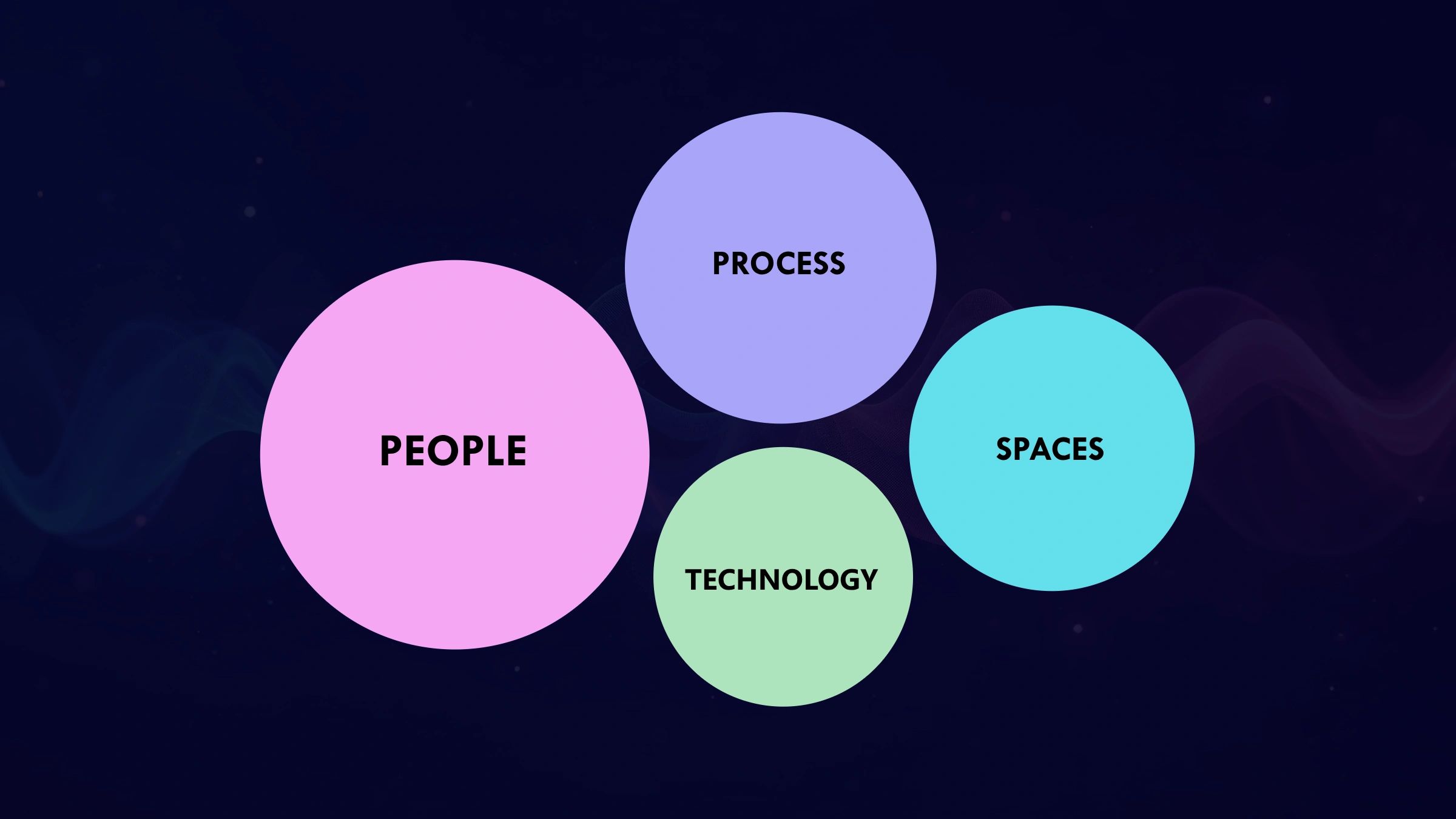
The Intelligent Workplace™ is an enterprise operating model that aligns four structural dimensions, Workforce, Workflow, Workspace and WorkTech, into a unified, AI-enabled system designed to enable consistent organisational performance, decision quality, collaboration and innovation at scale.
A Unified Operating System for Modern Work
By Marc A. Rémond Founder & Executive Partner, Strategic Pathways
Introduction
Work has changed faster than the workplace that supports it. People now work across time zones, tools, offices, homes, and hybrid schedules.
AI is embedded into sales, marketing, HR, operations, and decision making. Collaboration happens in physical rooms, virtual rooms, and increasingly between humans and machines.
Yet despite all of this change, most workplaces still operate on structures designed for a different era.
The result is subtle but pervasive friction. Meetings that should be simple feel exhausting. Workflows depend on individuals instead of systems. Technology stacks grow, but productivity does not. AI promises acceleration, yet often amplifies complexity.
Most organisations do not recognise this as a workplace problem. They experience it as a collection of unrelated issues. It is neither. It is the consequence of a workplace that was never designed as a system.
Why the Workplace Struggles in the Modern Era
Hybrid work did not break the workplace. AI did not break the workplace. They exposed what was already fragile.
For decades, organisations allowed the workplace to evolve in fragments. People were managed by HR. Processes were owned by Operations. Spaces were designed by Facilities. Technology was deployed by IT and vendors.
Each decision made sense in isolation. Collectively, they created an environment where work became harder than it should be.
Employees experience the workplace as one integrated environment. Most organisations still manage it as disconnected domains.
This misalignment is now one of the largest hidden barriers to productivity, efficiency, collaboration, and innovation.
The Structural Nature of the Problem
Consider an organisation that continuously upgrades its collaboration platforms, renovates office spaces, and introduces AI tools, yet still struggles with inconsistent meetings, slow decision making, and uneven employee experience.
The issue is not investment. It is architecture. Upgrading individual components without redesigning the system creates complexity rather than performance.
Technology modernises faster than workflows. Spaces change faster than behaviours. AI is introduced faster than data quality and process maturity. The workplace functions, but it does not operate optimally for modern conditions.
This is the gap the Intelligent Workplace addresses.
The Intelligent Workplace as an Operating Model
The Intelligent Workplace is not a product, platform, or isolated transformation initiative. It is a unified operating model for how modern work actually happens.
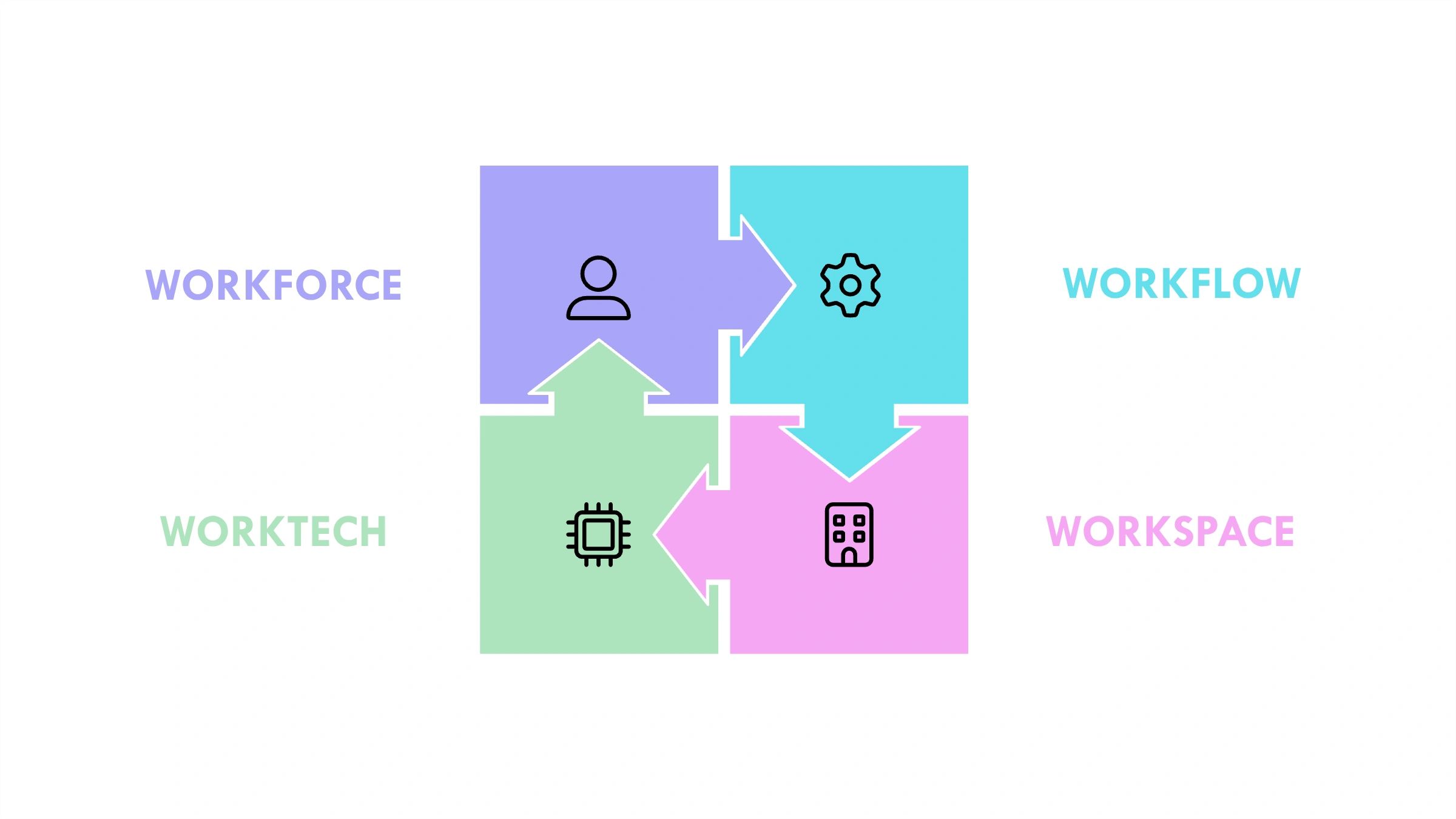
An Intelligent Workplace aligns four foundational dimensions that historically evolved independently:
- Workforce
- Workflow
- Workspace
- WorkTech
When these dimensions are aligned, work flows predictably and consistently. When they are not, friction becomes the default experience.
Alignment transforms the workplace from an accidental outcome of past decisions into an intentional system designed for current and future realities.
Strategic Implications for Organisations
Organisations that fail to address workplace misalignment experience predictable outcomes.
- Productivity declines quietly rather than dramatically.
- Technology investments underdeliver on expected returns.
- Hybrid collaboration remains inconsistent across locations.
- AI initiatives struggle to scale beyond isolated use cases.
- Employees compensate individually for systemic gaps.
Organisations that address the system experience a different trajectory.
- Work becomes easier rather than more demanding.
- Technology recedes into the background.
- Hybrid collaboration becomes reliable and repeatable.
- AI amplifies value rather than noise.
- Employees spend more time creating and less time compensating.
The difference is not tools. It is structural alignment.
Conclusion
In 2026, workplace strategy is no longer optional. Choosing not to define a workplace operating model is itself a strategic decision, one that directly influences productivity, competitiveness, and employee experience.
The Intelligent Workplace provides organisations with a structured way to see the full system, diagnose misalignment, and design work for the reality they already operate in. The future of work will not be defined by better tools. It will be defined by better systems.
About the Research
This research is based on a synthesis of industry analysis, enterprise advisory engagements, and applied field experience across global workplace, collaboration, and technology ecosystems.
The framework and insights presented were developed by Marc A. Rémond, Executive Partner at Strategic Pathways, and reflect longitudinal observation of enterprise workplace transformation initiatives across multiple regions and industries.
The analysis integrates enterprise advisory work, comparative assessment of workplace operating models, review of publicly available research, and observed outcomes from real-world deployments of hybrid collaboration, workplace modernisation, and AI-enabled initiatives.
The 4W Workplace Framework™ is designed to provide conceptual clarity, diagnostic structure, and decision support. It is not intended as prescriptive implementation guidance.
Sources and Reference Signals
The perspectives outlined in this paper are consistent with, and reinforced by, publicly available research and market analysis from leading industry bodies.
- Gartner: Future of Work Trends: Distributed, Digital, and Intelligent (2023–2024), Hybrid Work Is the New Normal, Predicts 2026: Digital Workplace and AI Enablement
- McKinsey Global Institute: The State of AI in 2023, Reimagining the Office and Hybrid Work
- Deloitte: Digital Workplace and Human Experience (2024), AI and the Future of Work
- Harvard Business Review: Why AI Fails Without Organisational Readiness, The Hidden Cost of Friction at Work
- Microsoft: Work Trend Index Reports (2022–2024)
- Metrigy: Workplace Collaboration and Meeting Experience Benchmarks
- World Economic Forum: The Future of Jobs Report
Frequently asked questions
What is the Intelligent Workplace?
The Intelligent Workplace™ is an enterprise operating model that aligns four structural dimensions, Workforce, Workflow, Workspace and WorkTech, into a unified, AI-enabled system designed to enable consistent organisational performance, decision quality, collaboration and innovation at scale.
Why do modern workplaces struggle?
Work changed faster than the workplace supporting it. For decades people were managed by HR, processes by Operations, spaces by Facilities and technology by IT, so employees experience one environment that is managed as disconnected domains.
What are the four dimensions of the Intelligent Workplace?
Workforce, human capability and Human-AI partnership; Workflow, how work is designed and executed; Workspace, physical and digital environments; and WorkTech, the technology systems that enable intelligence.
What changes when the four dimensions are aligned?
Work becomes easier rather than more demanding, hybrid collaboration becomes reliable and repeatable, technology recedes into the background, and AI amplifies value rather than noise.
Comments
Post a Comment