What Is the 4D Delivery Framework?
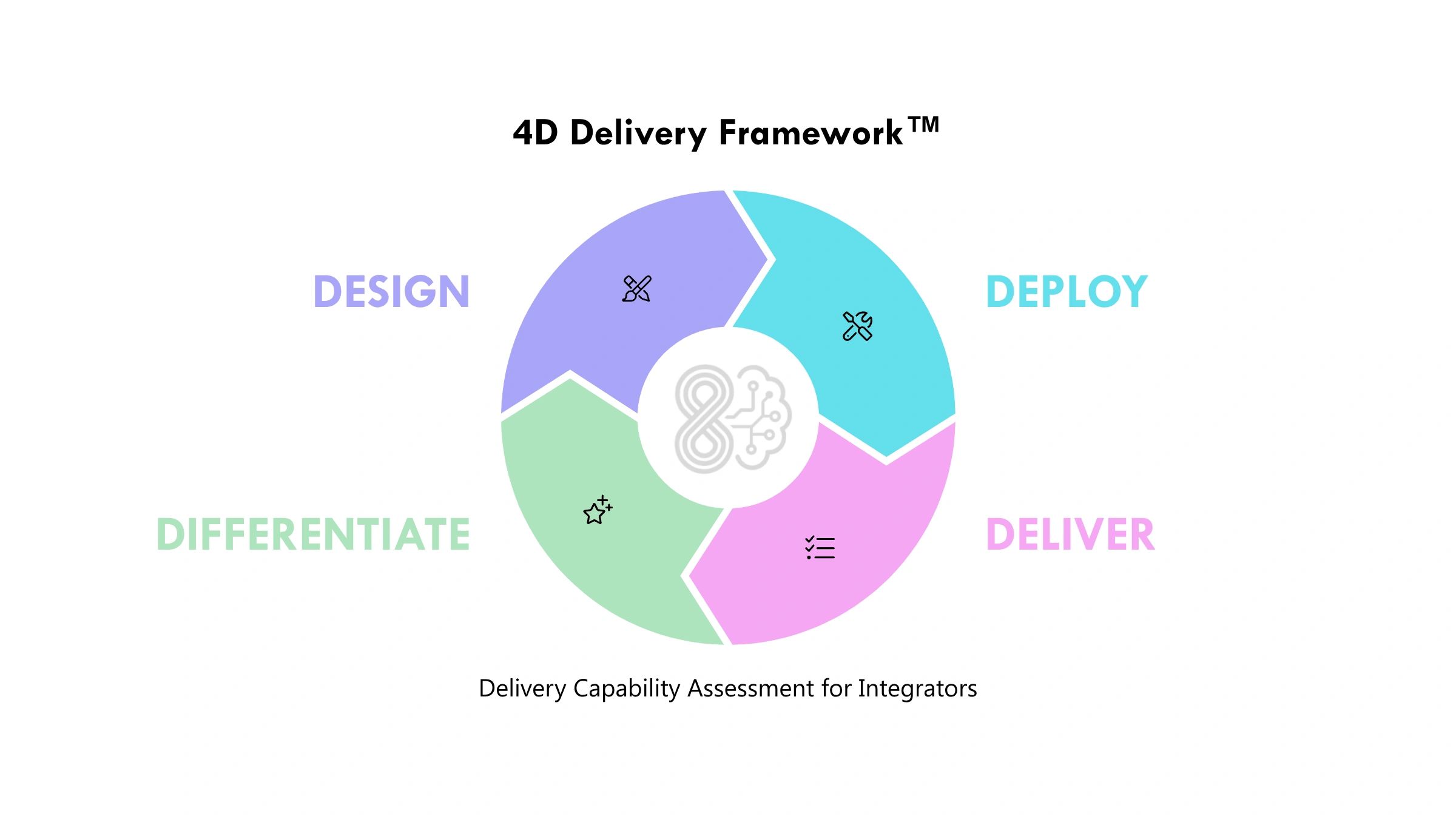
The 4D Delivery Framework™ assesses systems integrator delivery maturity across four dimensions: Design, Deploy, Deliver and Differentiate. It distinguishes integrators who can deliver Intelligent Workplace outcomes from those who can only deploy components.
The 4D Delivery Framework™
By Marc A. Rémond Founder & Executive Partner, Strategic Pathways
Executive Summary
As enterprises modernise their workplaces for hybrid work and AI enablement, systems integrators play a decisive role in determining whether strategy translates into real-world outcomes.
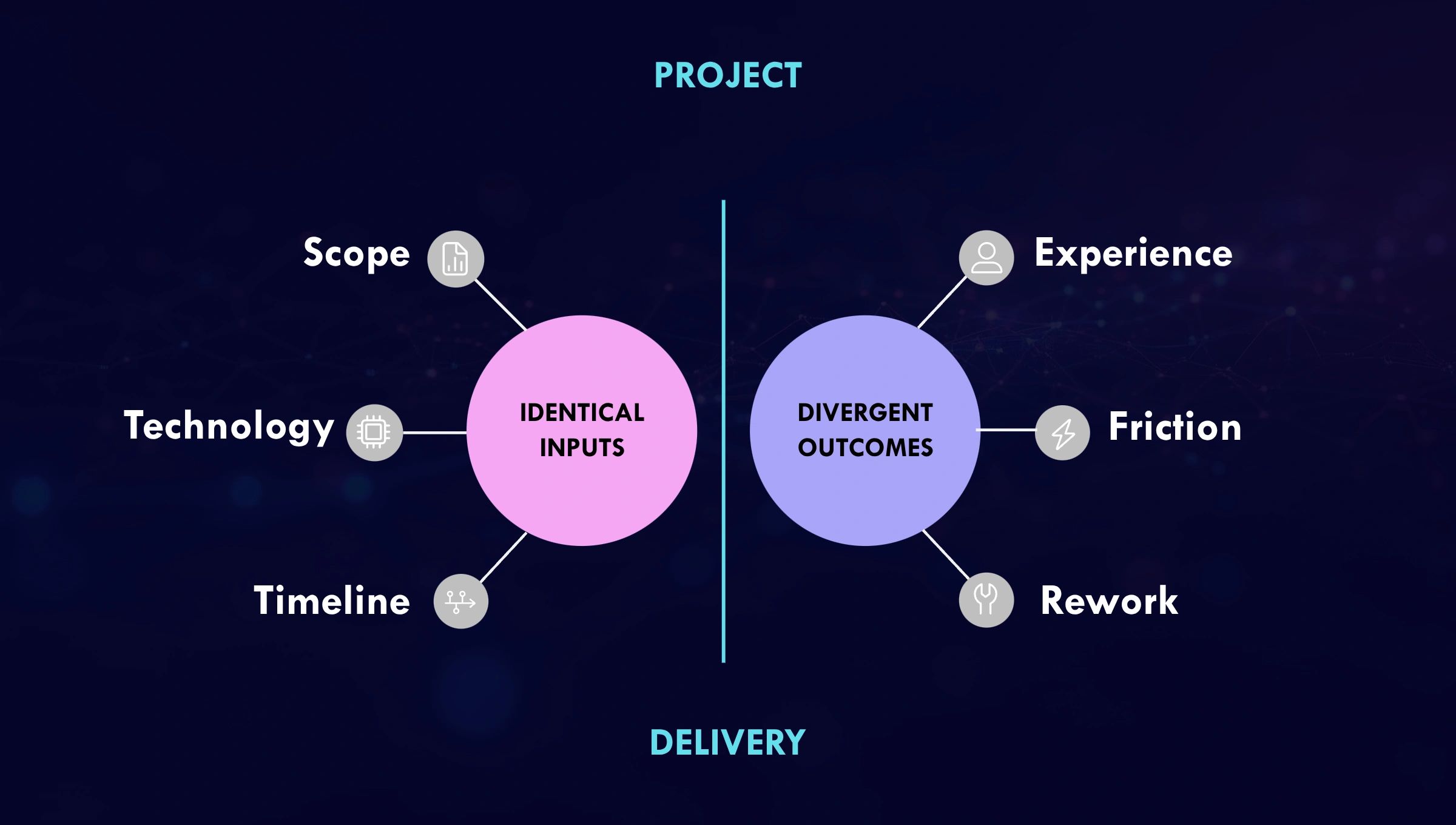
Yet delivery capability across the market varies widely. Two integrators may deploy the same technology stack and deliver radically different results. The difference is not product access or pricing. It is delivery maturity.
The 4D Delivery Framework™ provides a structured, evidence-based model for assessing and improving integrator capability across four dimensions: Design, Deploy, Deliver, and Differentiate.
It enables integrators to reduce execution risk, scale consistently, and position themselves as strategic partners in the Intelligent Workplace ecosystem.
The Delivery Gap Enterprises Rarely See
Enterprises increasingly expect integrators to deliver more than installations. They expect partners who can design hybrid experiences, integrate complex technology ecosystems, support AI readiness, and sustain performance over time.
However, many enterprise workplace challenges originate not in strategy or technology, but in delivery.
Common symptoms include:
- Inconsistent meeting and collaboration experiences across locations
- Solutions that work well in one region but fail in another
- Projects completed on time but underperforming in use
- Limited visibility into lifecycle performance and adoption
- AI initiatives constrained by unreliable environments
From the enterprise perspective, these appear as workplace failures.
In reality, they are delivery failures.
Why Integrator Capability Has Become a Strategic Issue
The integrator market evolved around projects rather than systems.
Historically, success was measured by installation quality, speed, and cost control. That model is no longer sufficient.
Hybrid work, global consistency requirements, and AI enablement demand a higher level of delivery maturity. Enterprises now depend on integrators to translate complex workplace strategies into repeatable, scalable outcomes.
The gap between expectation and capability is widening.
Without a structured model for assessing delivery maturity, enterprises struggle to distinguish between partners who can execute Intelligent Workplace outcomes and those who can only deploy components.
Introducing the 4D Delivery Framework™
The 4D Delivery Framework™ defines delivery capability across four interconnected dimensions:
1. Design: The ability to translate business requirements into integrated workplace architectures. This includes workflow mapping, experience design, solution standardisation, and alignment across AV, IT, UC, and AI foundations.
2. Deploy: The consistency and quality of installation, commissioning, documentation, and handover. This includes engineering rigor, quality assurance, testing discipline, and regional execution alignment.
3. Deliver: The capability to sustain performance over time. This includes lifecycle services, monitoring, support maturity, incident response, and continuous improvement.
4. Differentiate: The ability to deliver strategic value beyond execution. This includes specialisation depth, innovation capability, AI readiness, co-creation with vendors, and advisory credibility.
Delivery excellence emerges only when all four dimensions are mature and aligned.
Delivery Maturity and Outcome Variance
Integrator capability typically progresses through identifiable maturity stages:
- Fragmented: Project-driven execution with limited standardisation
- Emerging: Defined processes with inconsistent application
- Defined: Unified methodologies and cross-functional alignment
- Aligned: Data-driven operations and predictable outcomes
- Intelligent: Proactive, AI-supported delivery and lifecycle services
Many integrators operate between Fragmented and Emerging. Enterprises increasingly require partners operating at Defined or above.
The performance gap between these stages explains why similar projects produce vastly different outcomes.
Why 4D Matters in the Intelligent Workplace Era
The Intelligent Workplace is a system, not a collection of installations.
As workplaces become more interconnected and AI-dependent, delivery variability introduces operational risk. Inconsistent environments undermine workflow reliability, collaboration equity, and AI effectiveness.
The 4D Framework enables integrators to:
- Identify capability gaps objectively
- Reduce delivery variability across regions and teams
- Align internal functions around a shared delivery model
- Move upstream from project execution to strategic partnership
- Compete on outcomes rather than price
For enterprises, 4D provides a lens to evaluate integrator capability beyond certifications and references.
Strategic Outcomes for Integrators and Enterprises
Integrators applying the 4D Delivery Framework™ achieve:
- Greater delivery consistency across projects and geographies
- Improved customer trust and satisfaction
- Higher win rates in complex enterprise engagements
- Expansion into lifecycle and managed services
- Stronger differentiation in competitive RFPs
Enterprises benefit from reduced execution risk, predictable performance, and delivery partners capable of supporting Intelligent Workplace outcomes at scale.
Conclusion
Technology does not determine workplace success. Delivery does.
The 4D Delivery Framework™ provides a structured approach for elevating integrator capability from project execution to system-level delivery excellence.
In an era where workplace performance directly impacts enterprise productivity, AI enablement, and competitive advantage, delivery maturity is no longer optional.
About the Research
This research is based on a synthesis of industry analysis, integrator advisory engagements, and applied field experience across global workplace, collaboration, and technology delivery ecosystems.
The framework and insights presented were developed by Marc A. Rémond, Executive Partner at Strategic Pathways, and reflect longitudinal observation of integrator delivery models, enterprise outcomes, and ecosystem performance across multiple regions and industries.
The analysis integrates partner advisory work, comparative assessment of delivery methodologies, review of publicly available research, and observed outcomes from real-world deployments of collaboration, workplace modernisation, and AI-enabled solutions.
The 4D Delivery Framework™ is designed to provide conceptual clarity, diagnostic structure, and decision support. It is not intended as prescriptive implementation guidance.
Sources and Reference Signals
- Gartner: Magic Quadrant and Critical Capabilities for Unified Communications, Digital Workplace Service Provider Analysis
- Forrester: The Rise of Experience-Led IT Services
- Metrigy: Collaboration and Workplace Service Performance Benchmarks
- Harvard Business Review: Why Execution Is the Real Strategy
- McKinsey & Company: Delivering Large-Scale Transformation
Frequently asked questions
What is the 4D Delivery Framework?
A structured, evidence-based model for assessing and improving systems integrator capability across four dimensions: Design, Deploy, Deliver and Differentiate.
What are the four dimensions of the 4D Delivery Framework?
Design, translating business requirements into integrated workplace architectures; Deploy, the consistency and quality of installation, commissioning, documentation and handover; Deliver, sustaining performance over time; and Differentiate, delivering strategic value beyond execution.
Why do integrators deploying the same technology deliver different results?
The difference is delivery maturity rather than product access or pricing. Many enterprise workplace problems that look like workplace failures are delivery failures.
Why has integrator capability become a strategic issue?
Hybrid work, global consistency and AI enablement demand a higher level of delivery maturity, and enterprises now depend on integrators to turn complex workplace strategies into repeatable, scalable outcomes.
Comments
Post a Comment